

Shopping Cart
There are no more items in your cart
- Vivien Rolf
- Combat Sports
- 0 likes
- 3811 views
- 0 comments
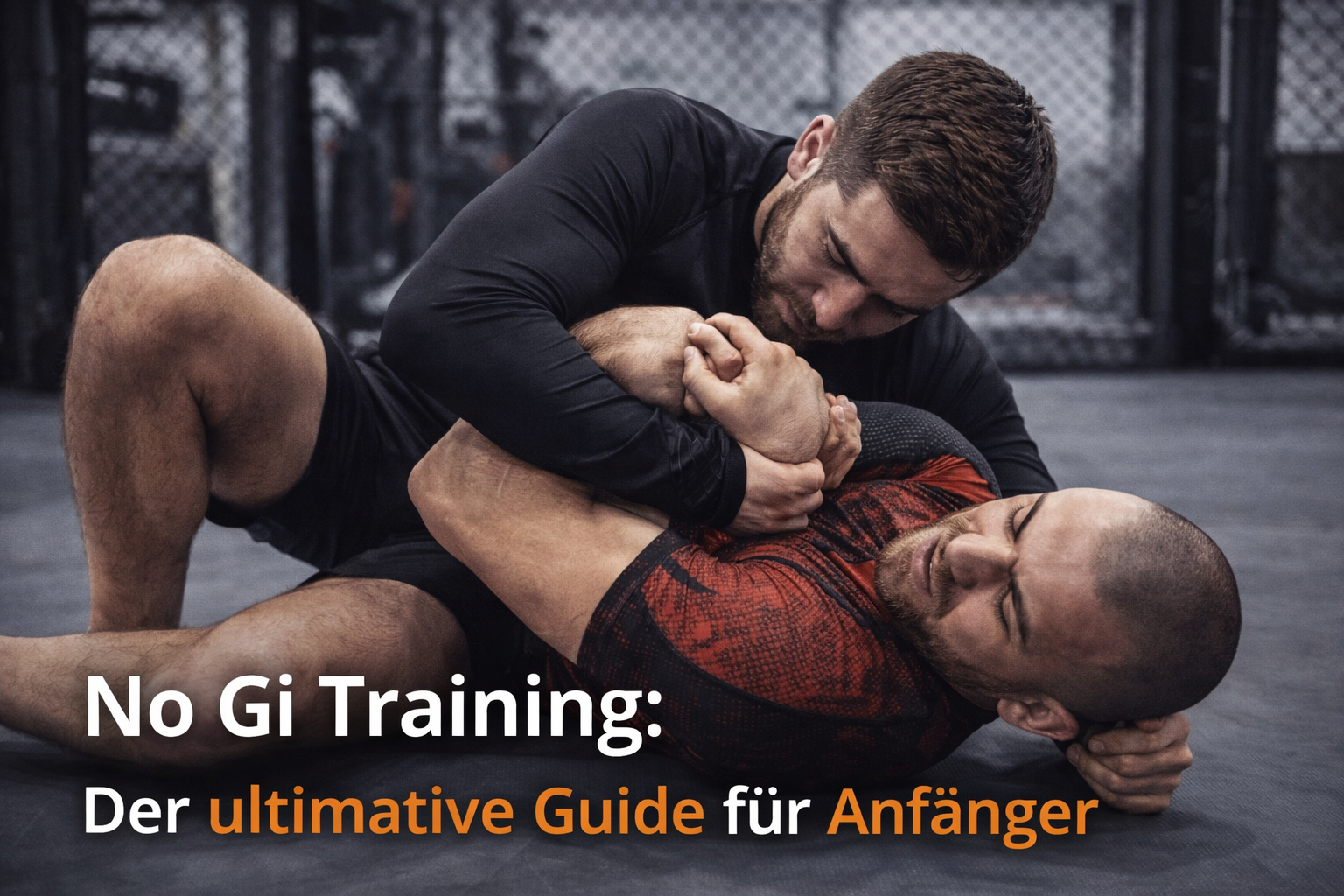
No Gi Training: The ultimate guide for beginners
1. Introduction to No Gi Training: What is it actually?
If you're new to martial arts, you may have heard of No Gi training but are unsure exactly what it means. Don't worry, in this blog article I will give you an introduction to this exciting training method.
No Gi training refers to training without the traditional kimono or gi, as is common in Brazilian Jiu-Jitsu. In contrast to gi training, where the focus is on grabbing and holding the opponent, no gi training concentrates more on moving quickly and fluidly and seizing opportunities for submissions. It is a dynamic and energetic type of training that strengthens your reflexes and ability to react quickly.
No Gi training is a rewarding experience for beginners in martial arts for several reasons. Firstly, it allows you to focus on the essentials: technical skills and strategies without the added factor of gi gripping. This makes No Gi training a suitable option to progress quickly and improve your ground fighting skills.
Another advantage of No Gi training is its versatility. It is not only suitable for men, but also for women, children and even MMA fighters. Whether you are interested in grappling, jiu-jitsu or other martial arts, No Gi training offers you the opportunity to expand your skills and learn effective techniques.
To successfully start No Gi training, it is important to understand the basics. In the next section of my article, I will explain the basics of No Gi training in more detail and tell you everything you need to know to get started. So stay tuned and look forward to exciting tips and tricks for beginners in No Gi training.
2. Why No Gi training is a worthwhile experience
Hey you! There are many reasons whyNo-Gi Training is a rewarding experience, especially for beginners like you. If you are new to BJJ (Brazilian Jiu Jitsu) or are just starting out with grappling training, no-gi training offers a lot of advantages.
First of all, it doesn't require any special equipment like kimonos or gi. This means you have to spend less money to get started. Especially for beginners, this can be a great relief, as the price of no-gi clothing such as rashguards and shorts is often lower. So you can concentrate on training without having to worry about expensive equipment.
In addition, theNo-Gi Training often more dynamic and faster than gi training. As there is no clothing to grab onto, it is more difficult to gain control and defend yourself. This trains your reflexes and reaction time in a different way. It's a challenge that can improve your fighting skills, whether it's for BJJ competitions orMixed Martial Arts (MMA).
Another advantage of No-Gi training is its versatility. It is not only suitable for men, but also for women and children. The techniques of No-Gi are easier to transfer to the real world as they rely less on grabbing clothing. So it's a great way to learn self-defence skills and boost confidence, regardless of age or gender.
Conclusion: No-gi training is definitely a worthwhile experience, especially for beginners. It's cheaper, more dynamic and more versatile than gi training. So what are you waiting for? Grab your shorts and rashguard and start no-gi training today!
3. The basics of No Gi Training - everything you need to know to get started
So, you are a beginner and want to start with theNo Gi Get started with your training? No problem! In this section, you'll learn everything you need to know to get off to a good start. No Gi, also known as No-Gi Brazilian Jiu-Jitsu (BJJ), is a discipline that is performed without the traditional Gi suit. This means that you don't wear a jacket or trousers and train in shorts and a rashguard. No Gi training offers many benefits, especially for beginners. It helps you to improve your strength, endurance and flexibility, while at the same time honing your technique and body control. Whether you are a passionate MMA fighter or just want to try your hand at grappling, No Gi training is suitable for everyone. As you are starting out as a beginner, you should concentrate on the basics. Learn the basic techniques such as control positions, tasks and defences. It's important that you have the right equipment for your training, including a good quality rashguard and shorts that fit comfortably and allow freedom of movement. Also pay attention to the price and quality of the equipment. Read reviews and find out about the different options on the market. With the right attitude and the basics of No Gi training, you will make rapid progress and improve your skills. Take the plunge and get into No Gi training now!
4. Beginner tips for successful No Gi training
If you're just getting into No Gi training, you probably want to know how to get the most out of your training sessions. Don't worry, I've got 4 beginner tips for you that will help you get into No Gi training successfully.
Tip 1: Set clear goals and stick to them. Before you start training, think about what you want to achieve. Do you want to improve your technique, build endurance or simply have fun and stay fit? No matter what your goals are, write them down and stay focussed during training. This will help you to make progress and stay motivated.
Tip 2: Learn from the experienced fighters. In No Gi training, there are often experienced fighters who already have a lot of knowledge and skill. Don't be afraid to learn from them. Be open and willing to accept tips and tricks. Observe their techniques and ask if something is unclear. Most fighters are happy to pass on their knowledge and help you improve.
Tip 3: Train regularly. No Gi training requires time and dedication to make progress. Try to go to training as often as possible and stay consistent. The more you train, the better you will get. Plan your training sessions in advance and stick to your training schedule. Regular training will make you stronger, faster and more technically proficient.
Tip 4: Don't let yourself get discouraged. Especially as a beginner, it can sometimes be frustrating if you don't get everything perfect straight away. But don't let this discourage you. Everyone starts small. Stay patient, keep practising and enjoy the process of learning. Over time, you will improve and see the progress you make.
These 4 tips for beginners will help you to successfully get started with No Gi training. Set clear goals, learn from the experienced, train regularly and don't get discouraged. With the right attitude and dedication, you will make great progress in No Gi training. So let's get started and discover the fun of grappling and MMA!
5. The right equipment for No Gi training - what you should look out for
If you're interested in No Gi training and ready to get started, it's important to have the right equipment. The right equipment plays a crucial role in your safety, comfort and performance during training. Here are a few things you should look out for to optimise your No Gi experience.
An essential item of clothing for No Gi training is the rashguard. This tight-fitting top offers protection against skin irritation and provides a good fit so that you can move freely. There are a variety of rashguards on the market that have been specially developed for No Gi training. Look for high quality material and good customer reviews to ensure you get a durable and comfortable product.
Another important part of the right equipment for No Gi training are the shorts. No Gi shorts are designed to offer freedom of movement and at the same time fit snugly to prevent slipping. Look for breathable and durable materials that will keep you cool and dry during training. Finding good quality at a reasonable price is often a matter of sufficient comparison and reading reviews from other buyers.
For those who want to take part in competitions, it is important to take the respective federation rules into account. Some federations allow certain equipment such as knee and elbow pads, while others prohibit them. Find out in advance to make sure you have the right equipment for the competition.
Last but not least, remember that No Gi training is accessible to everyone - regardless of age and gender. There is specialised equipment for women, children and even for those on a budget. Search online for deals and compare prices to find the best value for money.
By making sure you have the right equipment, you are not only showing your interest in No Gi training, but also investing in your safety and performance. So, grab your equipment and get started now with the ultimate beginner's guide to No Gi training!
6. Conclusion: Start now with the ultimate beginner's guide to No Gi training!
So, you've learnt the basics of No Gi training, why it's a worthwhile experience and even picked up some beginner tips. You're ready to dive into this exciting world of No Gi training! But where do you start? Don't worry, we've created the ultimate beginner's guide for you.
If you're just starting out with No Gi training, it's important to know that you don't need any special equipment. You can simply wear a comfortable T-shirt or sportswear that allows you enough freedom of movement. Also remember that choosing the right shorts is important to ensure unrestricted movement.
Another important aspect for beginners is wearing a rashguard. This special garment protects your skin from friction and irritation during training. You can also get rashguards with great designs to express your personal style.
When it comes to starting No Gi training, choosing the right training centre is crucial. Look for facilities that have experience in No Gi and Brazilian Jiu Jitsu and are well equipped. Also look for classes that are specifically offered for beginners to build a solid foundation.
Now that you're familiar with the basics and have kitted yourself out with the equipment, there are no more excuses! Start your No Gi training adventure and discover the world of grappling without wearing the Gi. It's a great way to improve your fitness, learn new techniques and have fun at the same time.
So grab your shorts, your rashguard and get training! You'll be amazed at how quickly you'll make progress and you're guaranteed to feel great. So don't waste any more time and get started today with the ultimate beginner's guide to No Gi training!
Conclusion: You have now received all the important information about No Gi training. From the definition to the basics and tips for beginners. You now also know what you need to look out for in terms of equipment. It's time to start your No Gi journey! Let yourself be inspired by this exciting and rewarding experience. Start now with our ultimate beginner's guide to No Gi training! In our future blog posts, we will cover even more interesting topics related to No Gi training. Don't miss any new content and become part of our No Gi community. Stay on the ball and learn more and more about this fascinating martial art. Subscribe to our blog and always be up to date. We look forward to accompanying you on your No Gi journey!
Our customers also ask again and again:
What is NoGi martial arts?
NoGi martial arts is a form of martial arts that is practised without wearing a gi, i.e. a combat suit. In contrast to classic BJJ (Brazilian Jiu-Jitsu), which is practised with a gi, NoGi focuses exclusively on techniques that do not require the use of clothing.
The main teaching focus in NoGi is on ground fighting. The techniques are centred on leverage and choking techniques as well as grappling, which focuses on holding and control holds. As the scope is narrower in NoGi and there are no material grips, particular emphasis is placed on body tension and body movements.
NoGi martial arts is often used as preparation for mixed martial arts (MMA), as it is an effective form of hand-to-hand combat that combines various techniques from Brazilian Jiu-Jitsu, wrestling and judo. Due to the absence of the gi, the focus is placed on speed, reflexes and grappling skills.
Fighters in NoGi martial arts usually wear tight-fitting shorts and rashguards to minimise injuries and ensure hygiene. Training often takes place in special NoGi dojos or in MMA martial arts schools.
With the increasing popularity of MMA and other martial arts, NoGi martial arts is also gaining more and more followers who want to take part in intensive and challenging training sessions. By training in NoGi, martial artists can improve their skills, increase their fitness and learn self-defence at the same time.
What is GI and NoGi?
GI and No-Gi are two different types of sport fighting. GI refers to the wearing of a suit or kimono during the fight, while No-Gi means that the fight takes place without the suit.
The GI is a traditional piece of combat clothing that can be found in various martial arts such as judo, jiu-jitsu and karate. It consists of a jacket and trousers, which are often made of robust cotton fabric. The GI provides additional grip and enables various techniques such as throws and holding techniques where you can utilise your opponent's suit.
In contrast, no-gi fighting takes place without a suit. The fighters usually wear tight-fitting sportswear such as shorts and rashguards. As there is no suit to grab onto, speed, agility and skin grip play a greater role. No-gi fights are often faster and require different techniques than GI-style fights.
Both styles of fighting have their own advantages and disadvantages. GI fighting encourages the use of grip and defence techniques that rely on the opponent's suit, while the no-gi style focuses more on speed and agility. Many martial artists train in both GI and no-gi styles to improve their skills in different areas.
Ultimately, the choice between GI and No-Gi depends on the personal preferences and goals of the individual fighter. Some prefer traditional GI fighting, while others prefer the challenges of the No-Gi style. However, both styles offer the opportunity to exercise physically, learn techniques and sharpen the mind.
How much does a GI cost?
A GI usually costs around CHF 100. However, there are different types of GIs, which can be in different price categories. Entry-level models can be found from around CHF 100, while high-quality GIs from well-known brands such as Hayabusa or Venum can cost well over CHF 150.
The price of a GI depends on various factors, including the quality of the material, the brand, the design and the additional functions. GIs made of high-quality material such as cotton or blended fabric are usually more expensive than those made of polyester or cheap materials.
In addition, special features or designs can increase the price of a GI. A GI with an embroidered logo or special embellishments will usually be more expensive than a plain model. Limited editions or special designs can also have a higher price.
It is important to note that the price of a GI does not necessarily reflect the quality or performance of the product. There are high-quality GIs at affordable prices and vice versa. Before buying a GI, it is advisable to compare different brands and models and read customer reviews to make the best choice.
To summarise, a GI usually costs around CHF 100 to 150, but the final price depends on various factors such as material, brand, design and additional functions. The rightBelt is added separately. You either have to buy it or you can borrow it from your teacher or association.
What is the difference between BJJ and JJ?
The difference between BJJ (Brazilian Jiu-Jitsu) and JJ (Jiu-Jitsu) lies mainly in their origin and style. BJJ is a modification of traditional Jiu-Jitsu, which was developed in Brazil. It was further developed by the Gracie family to develop effective techniques in ground fighting and defence against larger opponents. BJJ places a strong emphasis on ground fighting, controlling the opponent and the use of leverage and choke techniques.
In contrast, JJ is a more general term that includes various styles of traditional Jiu-Jitsu that were developed primarily in Japan. JJ emphasises both ground fighting and standing combat. It includes techniques such as throws, joint levers and punching and kicking techniques. While BJJ is more focused on self-defence and competition, JJ often also emphasises philosophical and spiritual aspects as well as the development of discipline and character.
Another difference between BJJ and JJ lies in their popularity and spread. BJJ has grown in popularity worldwide in recent decades, particularly due to the success of the Gracie family in mixed martial arts (MMA) competitions. There are now numerous BJJ schools and tournaments in many countries. JJ, on the other hand, is still popular in Japan and some other Asian countries, but does not have the same global presence as BJJ.
To summarise, BJJ and JJ are different styles of jiu-jitsu. BJJ is a further development from Brazil that focusses on ground fighting and was coined by the Gracie family. JJ, on the other hand, is a more general term that encompasses various styles of jiu-jitsu from Japan and emphasises both ground fighting and standing.
The text of the article is subject to the copyright of the author and may not be used by third parties!
Comments (0)