

Shopping Cart
There are no more items in your cart
Combat Sports Guides for Switzerland
Which combat sport is right for you, and what equipment do you really need? The Vikingstore blog features clear and honest guides to boxing, kickboxing, Muay Thai, MMA, BJJ, judo and other martial arts.
We answer questions regularly asked by beginners, active fighters and coaches in our stores. Topics include choosing boxing gloves, finding the right weight in ounces, hand wraps, mouthguards, headguards, shin guards, boxing shoes and preparing for your first training session.
Which combat sport is suitable for beginners?
The right discipline depends on your interests and goals. Traditional boxing focuses on punching techniques, footwork, distance management and defence. Kickboxing and Muay Thai also include kicks and, depending on the rules, knee strikes and clinch techniques.
BJJ and judo concentrate more on throws, ground fighting and submission techniques. MMA combines striking, kicking, wrestling and ground fighting. However, beginners do not automatically need to start with MMA. Learning the fundamentals of one discipline first can often be a sensible approach.
What equipment do you need for combat sports?
For an initial trial session, comfortable sports clothing may be sufficient, depending on the gym. The protective equipment required afterwards depends on the discipline and your coach’s instructions.
Boxing gloves, hand wraps and a mouthguard are fundamental items for boxing. Kickboxing and Muay Thai often require additional shin guards and groin protection. BJJ and judo gis differ in cut, material and technical requirements. No-Gi BJJ is generally practised in a rashguard with grappling shorts or suitable leggings.
How do you choose the right boxing gloves?
Boxing gloves differ in more than colour and price. Their intended use, padding, fit, material, closure and weight in ounces all matter.
Gloves designed for heavy-bag training have different requirements from models intended for sparring or competition. Options such as 10, 12, 14 and 16 OZ should not be chosen at random. Body weight, hand size, type of training and gym rules must all be considered.
Fit also varies between brands, meaning that a simple size chart is not always enough. Our guides explain the differences in detail and help you avoid buying unsuitable gloves.
How should you care for combat sports equipment?
Boxing gloves, shin guards and hand wraps absorb moisture during training. They should be removed from the sports bag after every session and allowed to dry in a well-ventilated place. Hand wraps should also be washed regularly.
Leaving damp gloves sealed inside a training bag is the fastest route to unpleasant odours and a shorter lifespan. Our articles provide practical advice on cleaning, drying and caring for different materials.
Advice Based on Real Retail Experience
Vikingstore is not an anonymous online shop. We advise combat athletes, parents, coaches and clubs every day and understand the most common questions and purchasing mistakes from real experience.
As an official Swiss partner and importer of several combat sports brands, we work directly with names such as LEONE1947, Sting Sports, SafeJawz, Namman Muay and Venum.
Our goal is not simply to sell you the most expensive gloves. We want to help you find equipment that genuinely suits your discipline, training requirements and budget.
Discover our combat sports guides or visit the Vikingstore locations in Bern and St. Gallen for personal advice.
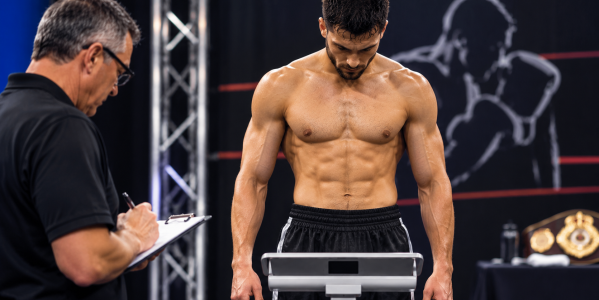
Making Weight in Boxing - Weight Cutting, Nutrition and Fight Preparation
Anyone who has watched the official weigh-in before a professional boxing match will be familiar with this phenomenon: a boxer steps onto the scales at exactly the required weight, only to enter the ring the following day several kilograms heavier. But how does this actually work? How do professional boxers reach their weight class without unnecessarily sacrificing muscle mass and physical performance? And what role do nutrition, creatine and other supplements play?
Read more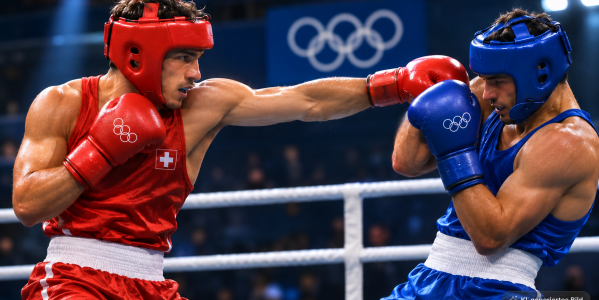
Olympic Boxing: Rules, Scoring & Equipment Explained
Olympic boxing is a full-contact combat sport in which clean punches, technical skills, tactics and ring control are essential. Compared with professional boxing, Olympic bouts are shorter, making speed, precision and the ability to win individual rounds particularly important. Olympic boxing is often called amateur boxing. However, the terms are not entirely interchangeable. Professional boxers may also be eligible to compete at the Olympic Games, provided they meet the applicable qualification requirements. But how does Olympic boxing scoring work? Which punches are allowed? Why do some boxers wear headguards while others do not? And what equipment do you need for training and competition? This guide explains the most important rules, differences and equipment requirements.
Read more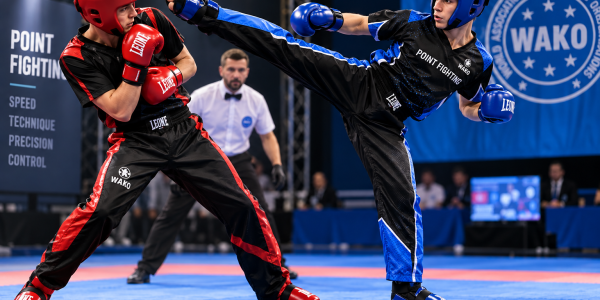
Point Fighting: Rules, Equipment and Differences Explained
Point Fighting is one of the fastest and most technical disciplines in kickboxing. Instead of relying on maximum punching power, fighters need speed, precision, excellent timing and controlled techniques. After a valid scoring technique, the action is stopped briefly before the fight continues – creating the explosive rhythm that makes Point Fighting so distinctive
Read more
Boxing Gloves for Wide Hands: Which Models Really Fit?
You put on a new pair of boxing gloves and can barely get your hands inside? Your fingers feel squeezed together, and once you add hand wraps, the gloves become even tighter? The problem isn't necessarily the number of ounces. Often, the cut of the boxing glove simply doesn't suit your hand shape.
Read more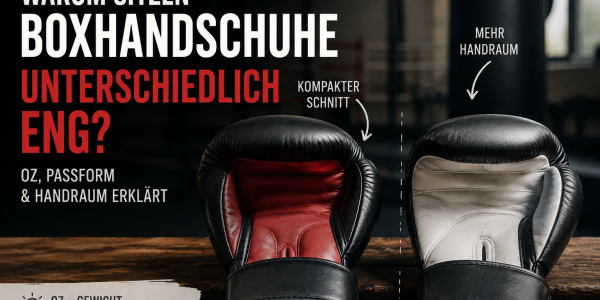
Why Do Some Boxing Gloves Feel Tighter Inside? - Fit, Hand Compartment & Brand Differences
You try on two pairs of boxing gloves with the same OZ rating – yet one feels comfortably snug while your hand has noticeably more room inside the other. Many beginners are surprised by this. After all, 10 OZ, 12 OZ, 14 OZ and 16 OZ are often presented by retailers almost as if they were different glove sizes.
Read more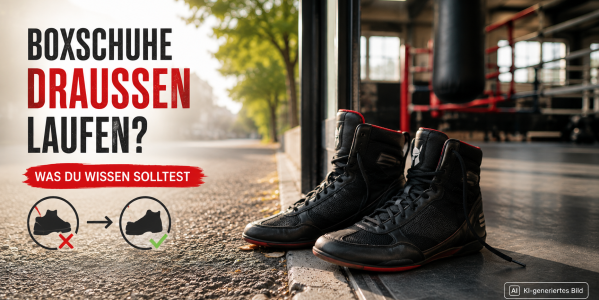

Why Your Wrist Hurts When Boxing - The Most Common Causes and How to Prevent It
Wrist pain is one of the most common problems experienced by boxers. Beginners are often surprised when their wrists start hurting during training or after hitting the heavy bag. The good news is that, in most cases, the pain is not caused by a serious injury. Poor technique, unsuitable equipment or overtraining are usually the main reasons.
Read more
Why Many MMA Gyms Don't Accept Complete Beginners
Mixed Martial Arts (MMA) is one of the most demanding combat sports in the world. It combines striking, kicking, wrestling, takedowns and ground fighting into one discipline. Because of this complexity, many MMA gyms prefer new members to have previous experience in another martial art. If you have never trained before, you may be advised to spend several months learning boxing, kickboxing, Muay Thai, wrestling or Brazilian Jiu-Jitsu before joining an MMA class.
Read more
How High Should a Punching Bag Hang? Height, Weight, Installation and Home Gym Tips
A punching bag is one of the most effective training tools for boxers, kickboxers and fitness enthusiasts. To ensure safe and realistic training, it must be installed correctly. Besides the correct hanging height, the bag's length, weight, mounting method and noise level are all important factors. In this guide, you'll learn what to consider when choosing and installing a punching bag.
Read more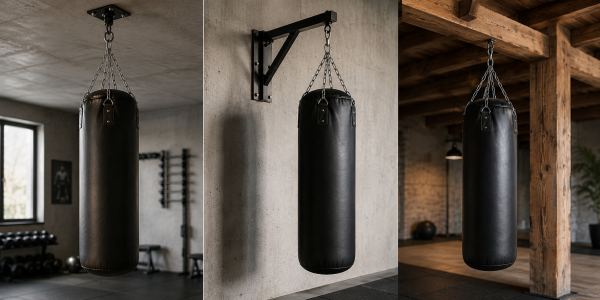
Mounting a Punching Bag to the Ceiling, Wall or Wooden Beam - Which Option Is Best?
A punching bag is one of the most effective training tools for boxing, kickboxing, Muay Thai and many other combat sports. Before you can start training, however, one important question needs to be answered: Where should you mount your punching bag? Whether you choose the ceiling, a wall or a wooden beam, each mounting option has its own advantages and disadvantages. The right choice depends on your building structure, the weight of the punching bag and, above all, safety. In this guide, you'll learn which mounting method is best for your home gym and what you should consider before installation.
Read more